中文
Content Details
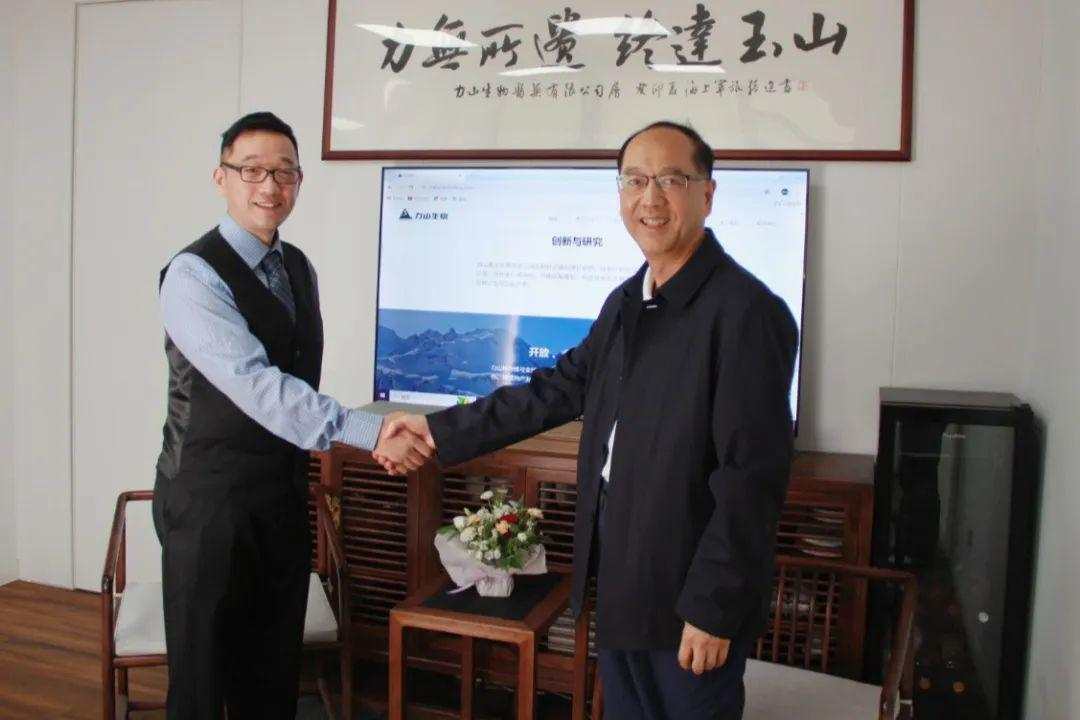
Insight from Lishan - Dialogue between Chairman Chen Weijie and Dr. Li Changqing
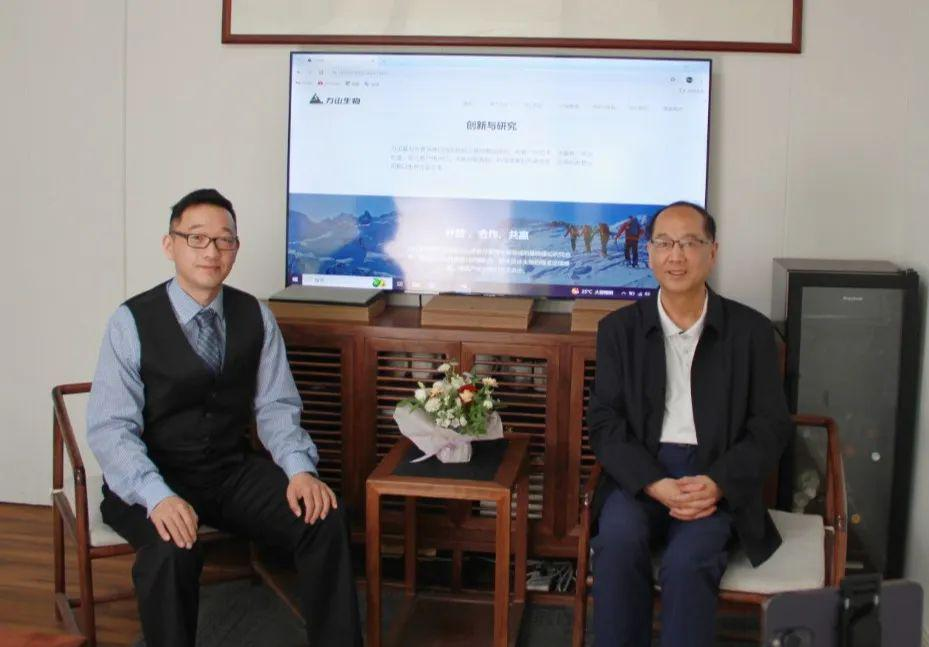
Dr. Chen Weijie
Chairman of Lishan Biotechnology
Hello Dr. Li Changqing, I am very pleased today and welcome you to Lishan. Today we will have a brief interview to discuss your views as a former FDA senior medical reviewer on clinical trials of live bacteria drugs.
Can you describe the uniqueness of clinical trials for live bacteria drugs and how they differ from other small molecule drugs? Thank you for choosing to collaborate deeply with Lishan Biotech. We also hope that you can introduce the precautions that need to be taken in multi center clinical trials.
Dr. Li Changqing
Eglin Medical Clinical Expert
Thank you, the topic you mentioned is very good and profound. I would like to share my views from the following aspects:
Firstly, I was involved in this field quite early on. I have been involved since the first official research was conducted in the world. About 10 years. I have seen several stages:
The first stage is the exploration stage. Everyone knows that based on biological foundations, this field has great prospects in clinical practice, but they do not know how to apply it. At that time, there were several unclear aspects compared to traditional pharmaceuticals. The target was very clear when making drugs before. In this field, the target is not clear, and some people say it is like traditional Chinese medicine, where the specific mechanism of action is unknown when several traditional Chinese medicines are mixed together. This poses significant challenges in terms of production and quality control systems.
In the FDA review process, the focus of consideration is similar to the way traditional Chinese medicine was reviewed back then. For traditional Chinese medicine, the challenge faced by the FDA is how to handle complex ingredient combinations. Traditional Chinese medicine typically contains multiple components, possibly dozens or even hundreds, making it almost impossible to analyze each component individually.
Therefore, the strategy adopted by the FDA is to identify and determine several representative ingredients or marker substances. These biomarkers may not necessarily be the main active ingredients of the drug, but they can be used to reflect the stability and quality of the product. For example, if a traditional Chinese medicine contains 12 ingredients, the FDA will not require detailed chemical structures and mechanisms of action for all ingredients, but will require the applicant to identify several key ingredients as biomarkers to serve as testing standards for product quality and consistency. This method can simplify the review process while ensuring the safety and effectiveness of the product.
After doing this a few times, this viewpoint gradually extended to the field of Microbiome. At the beginning, everyone didn't know how to do it in this field, so it went into clinical trials. Its safety is relatively reliable, especially for fecal transplantation, especially for doing one's own fecal transplantation, so there is no problem. Measured by clinical indicators, this process actually took some time. About 10 years later, it finally received approval last year. This path has been successfully taken, and the reason for its success is that the indications have been selected, which is very important.
The indications they have chosen are not very large. He found the basic logic: after using antibiotics, the microbiota is completely destroyed and needs to be replenished. When replenishing the microbial community, one or two bacteria cannot complete it, and the entire ecological environment needs to be restored. The key is to restore the original ecological environment through fecal microbiota transplantation. The logic and clinical outcomes have shown some breakthroughs.
The important issue we are facing now is selecting indications, which is very important. For example, the approach of tumor vaccines is to extract the patient's tumor from tumor tissue, analyze the antigens in it, synthesize dozens of peptides, and use these peptides to treat the patient. So, tumor vaccines also work through dozens of peptides.
I think its development direction is to design based on individual characteristics. As a part of this field, precision is a very important development direction. We should not fantasize that one day in this field, we will be able to treat all patients with very many or very large illnesses. Now, we must take a precise development path, which means identifying which subgroups and their characteristics and treating them with the strains of bacteria we choose. This is probably a very important direction.
Dr. Chen Weijie
Chairman of Lishan Biotech
Thank you, Dr. Changqing. Following your topic, can we improve the efficiency of patient subtype classification by combining multi omics and artificial intelligence? Eglin has made arrangements in the field of artificial intelligence. What changes will AI enabled clinical trials or research bring? What do you think?
Dr. Li Changqing
Eglin Medical Clinical Expert
In addition to the precision therapy mentioned earlier, AI will indeed bring fundamental changes to clinical research. It's not just a tool anymore. For example, when conducting clinical research, the previous research method was based on hypotheses, that is, proposing hypotheses first. Based on this hypothesis, I designed a clinical trial to intervene and then proved whether the hypothesis was correct or incorrect. This is the original methodology. The emergence of AI has completely changed this methodology. Previously, it started with hypotheses, but now it starts with looking at data and discovering hypotheses through data. Through big data analysis, complex relationships and potential hypotheses can be identified in a disease. Once the hypotheses are found, I can then evaluate which ones have a higher success rate based on my current data. So the research methodology has been completely overturned, shifting from hypothesis driven to data-driven.
Dr. Chen Weijie
Chairman of Lishan Biotech
Understood, that is to say, AI will bring about a paradigm shift in research, from what we call hypothesis driven to a data-driven one. Lishan is also one of the leaders in the trend of AI driven research paradigm shift. We believe that the collaboration between Lishan and Eglin will bring new scientific research achievements and clinical products to the biopharmaceutical industry. From your perspective, what are your prospects for the cooperation between Lishan and Eglin?
Dr. Li Changqing
Eglin Medical Clinical Expert
Lishan has done very well, and I think Lishan is at the forefront of this field. This is an emerging industry that has emerged in recent years, from academic research to practical stage, and Lishan has done very well. Secondly, Lishan has been closely following the tool applications brought by AI to make many improvements in research and methods, especially in the connection between changes in microbial communities and disease changes, which is very interesting. From our strategic cooperation, our respective technological advantages can complement each other. Approving a drug or conducting work within the pharmaceutical industry requires a high regulatory environment, which requires a deep understanding of regulatory requirements, their underlying meanings, and declaration processes, which is our strength. It is important to conduct research solely based on scientific evidence, but it is also crucial to translate scientific evidence into regulatory requirements in a regulatory environment. This is our strength, and there are also many areas where we can collaborate.
Dr. Chen Weijie
Chairman of Lishan Biotech
You are right. The main advantage of Lishan is scientific research in the laboratory, but there is a long way to go from taking this step in the laboratory to clinical practice. This requires experienced predecessors to help Lishan more, transform the innovative scientific research results in the laboratory into clinical products, and then commercialize them to benefit patients.
Dr. Li Changqing
Eglin Medical Clinical Expert
Yes, this is a very important aspect. Both of our companies are conducting research on artificial intelligence, and we can continue to discuss areas of complementarity. For example, in terms of regulation, we are working on a big model to organize the logic of FDA approved drugs. Through this big model, we can not only analyze problems based on experience, but also use AI to analyze the underlying logic behind thousands of pieces of data. In the past, we each saw a part of it, but it was difficult to fully understand it. Now we are essentially building an advanced intelligent system that can not only comprehensively describe the logic of the past, but more importantly, form a network and framework. For example, what is the FDA's logic for a certain type of problem? What is the specific logic behind approving this type of drug? Through this approach, we can systematize these logics and utilize this intelligent system to help us better understand and set development paths based on data.
Dr. Chen Weijie
Chairman of Lishan Biotechnology
That's right, from this perspective, Lishan and Eglin do have similarities. We study the interaction between microbiota and human metabolism, immunity, and neural networks, which is a complex system. And AI far surpasses human intelligence in handling such complex systems, clarifying the underlying context, providing reasoning paths and evidence. This is also the reason why we have invested a lot of effort in researching this field. Time is limited today, and I look forward to having more opportunities to consult with Dr. Li Changqing in the future.
Dr. Li Changqing
Eglin Medical Clinical Expert
No, Dr. Chen Weijie, thank you.
Share


Follow Us
Service Hotline: 021-6888-8088
E-Mail: lishan@lishan.ltd
Company Address: Room 1809, Building 4, No. 500 Jianyun Road, Pudong New District, Shanghai

About Lishan
R&D Pipelines
Technology Platform
News & Events
Contact Us

 Shanghai Public Network Anbei 31011502019930